
Odenton Previous Residents by Record Era
The record trail changes by era. A current parcel account anchors the address. Land records then identify recorded legal interests. Directory books and census schedules narrow a household to a time window, while permits, probate, and obituary research explain changes that deeds alone miss. Odenton keeps no separate municipal recorder. These records sit with Anne Arundel County and Maryland custodians.
| Source | Dates located | Where held | What it contributes |
|---|---|---|---|
| SDAT parcel account | Current account; historical start not stated | Maryland SDAT | Current owner, mailing and situs addresses, PAN, sale and deed reference |
| Anne Arundel land books | Online start not stated | MdLandRec and Circuit Court research room | Deeds, mortgages, releases, legal descriptions, and prior citations |
| Estate index CE299 | 1875-1960 | Maryland State Archives | Estate name, date, and fiduciary or heir trail |
| County and suburban directories | 1887 to 1965 leads located | Archives, libraries, and Library of Congress leads | Address, business, telephone, and household clues |
| Federal census | Released through 1950 | NARA and library databases | Household composition and enumeration geography |
| Land Use Navigator | Current system; older start not stated | Anne Arundel County | Construction, inspection, development, and licensing timing |
Match the source to the era of the question. A recent transfer begins with parcel and deed. An early family question points instead to the estate index and older county records. No modern street address appears that early. For households, directory and census pairing beats the owner line. A legal owner, a listed telephone subscriber, and a resident are three different things.
Odenton Parcel Clues Before the Deed
The Maryland SDAT Real Property Data Search finds an Odenton property by address, street name, account identifier, or map reference. It offers no owner-name or ZIP search. For street work, the state says to drop directional prefixes and suffixes. Enter a full street name for an exact result. A shortened name plus an asterisk widens the net. Save the property account number, called the PAN in Anne Arundel County. Keep the situs, mailing address, recent sale reference, and liber and folio if shown.
Mailing and situs addresses are not the same thing. The situs is the physical property. The mailing address is where tax notices go. A mismatch can signal an estate, company, or fiduciary arrangement. It proves nothing about occupancy at the Odenton property. Treat the account as a marker, not a roster.
The official SDAT property glossary defines the terms used around account, assessment, sale, and deed references.
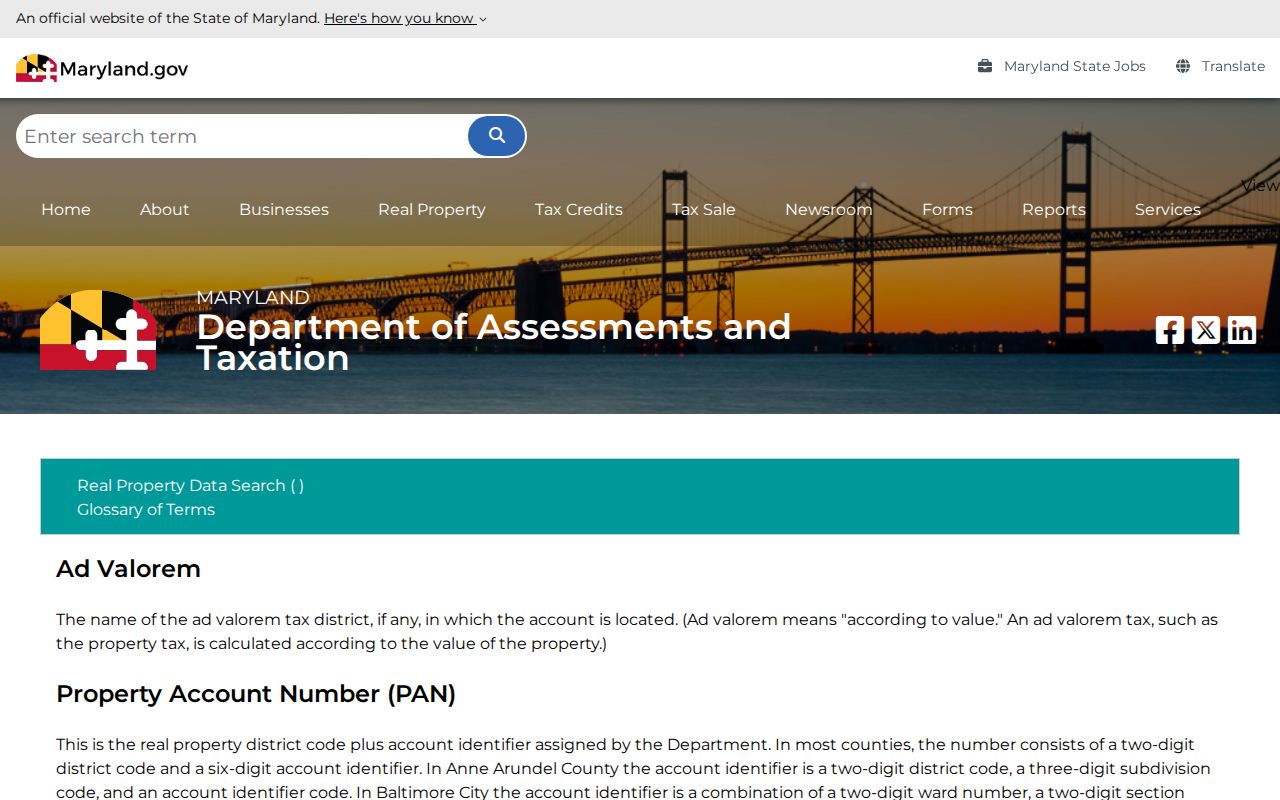
These fields are the handoff. From here the deed chain opens. Note: Keep the PAN and legal description with each address, because an old street label may not match a later record.
Following the Anne Arundel Deed Chain Backward
Maryland keeps land records through the Circuit Court's Land Records Department. The acquisition deed names the owner as grantee. The seller is the grantor. Read the instrument's legal description and its reference to an earlier deed, then search that prior grantor as a grantee. That reversal turns a transfer into a chain. A chain of title is the succession of recorded interests in one parcel.
- Find the current Odenton address in SDAT and save the PAN, situs, owner, sale date, and liber and folio.
- Create or use a MdLandRec account, select Anne Arundel County, and locate the acquisition deed by reference or party.
- Transcribe the grantor, grantee, recording date, legal description, consideration, and prior-deed citation.
- Search that grantor as an earlier grantee, and repeat the process for each prior transfer.
- Branch when an estate, trust, corporation, foreclosure, or several heirs appear, preserving every name variation.
- Use the plat and legal description to keep the parcel stable when an old address is missing or a subdivision name changes.
- Use the Circuit Court research room for hardbound books, digital images, or other older media when the online path is incomplete.
- Grantor and grantee
- The grantor conveys an interest; the grantee receives it in the recorded instrument.
- Chain of title
- A chronological sequence of recorded transfers and interests for the same parcel, not a list of every occupant.
- Legal description
- The lot, block, subdivision, metes-and-bounds, or other recorded parcel wording that links old documents when street names fail.
The MdLandRec login route requires an account for verified online instruments.
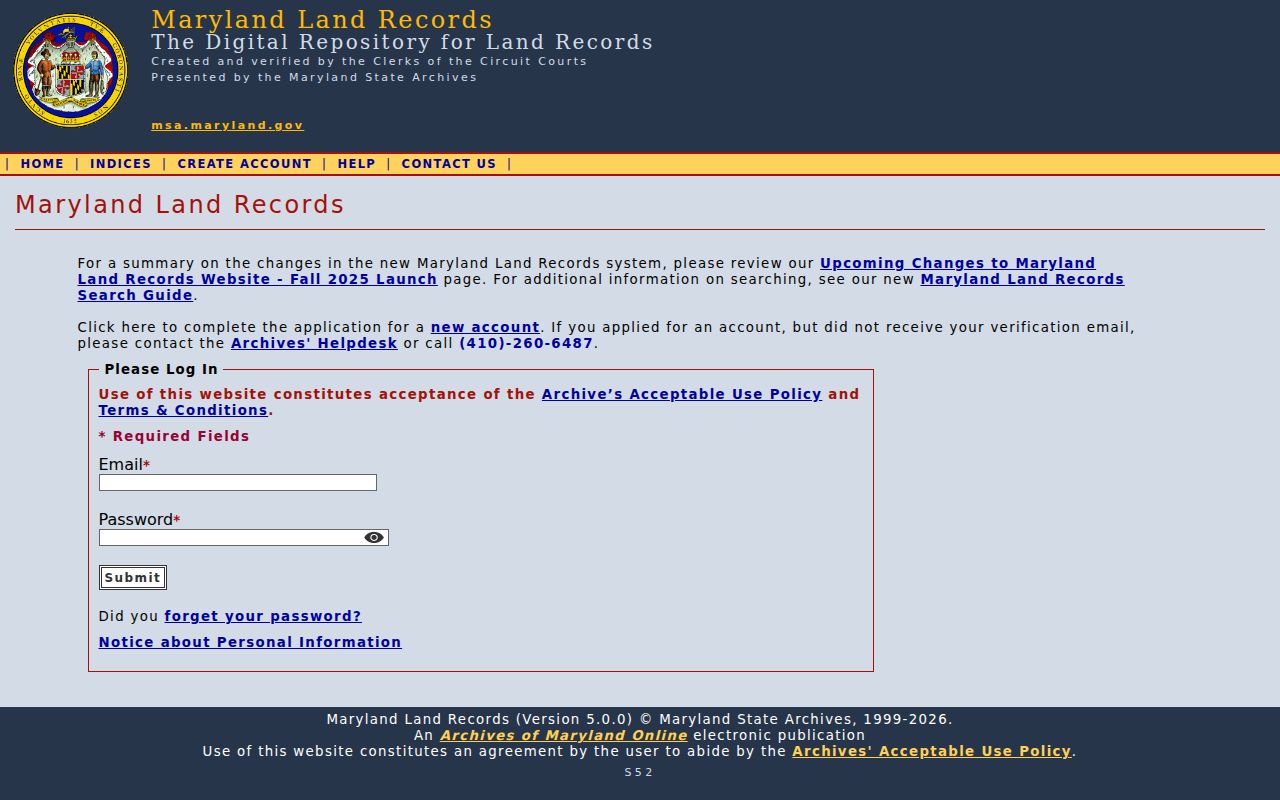
Anne Arundel's official county page lists no single cutoff year for online records. For older deeds, the public research room remains the reliable fallback. The Land Records counter offers another route. Copies there cost 50 cents per page. Certification adds $5 per document. Mail requests should include the book and page, the total page count, and payment. Call the department with any copy or archival-file question before relying on a web result.
Odenton Previous Residents and Legal Descriptions
Old addresses are fragile identifiers. A deed may cite a lot, block, condominium reference, or subdivision without any street number a reader knows today. Use Maryland's digital plat reference system to read the recorded subdivision geometry. Then compare the parcel with county GIS. Parcel, zoning, and development layers help, as do the Odenton Growth Management Area, Odenton Regulatory Blocks, and Odenton Sub Areas overlays. But a map polygon never identifies a household.
For a previous-residents question, the useful flow runs from address to SDAT, from SDAT to deed reference, from deed to legal description, and from description to plat or GIS. LUN permit records may date an addition, demolition, or change of use. A permit applicant is not automatically the owner. Some LUN documents stay out of public view. The remedy is a Maryland Public Information Act request. Include the address, any known parcel or permit number, the record type, and the date range. Ask for electronic inspection or copies.
Odenton Past Residents in Directories and Census
Deeds track legal ownership, not necessarily who slept at an address. For occupancy, historical directories and census schedules are the stronger household evidence for Odenton. The searchable leads are rich. They include the 1887 Anne Arundel Directory and Gazetteer, Annapolis directory holdings for 1896-97, 1910, 1924, 1934, and 1939, and Polk volumes for 1939 and 1972. Telephone books help too. So do Baltimore Suburban leads from 1961-65. Watch the headings. Odenton listings may sit under Odenton Junction, Annapolis, or Baltimore Suburban West. Some sit under a broader county heading.
A practical household flow starts with a directory address. From there, move to neighboring directory years, and then to the closest released census. Deed, obituary, probate, or vital-index support can finish the trail. A directory's address or telephone line can pin down one occupant. The census, meanwhile, captures the whole household on its enumeration date. The collections and publishers get detailed treatment in the Odenton directory book. Shelf locations appear there as well.
The AACPL local-history collection is a county source. It covers maps, local books, photographs, and genealogical files.
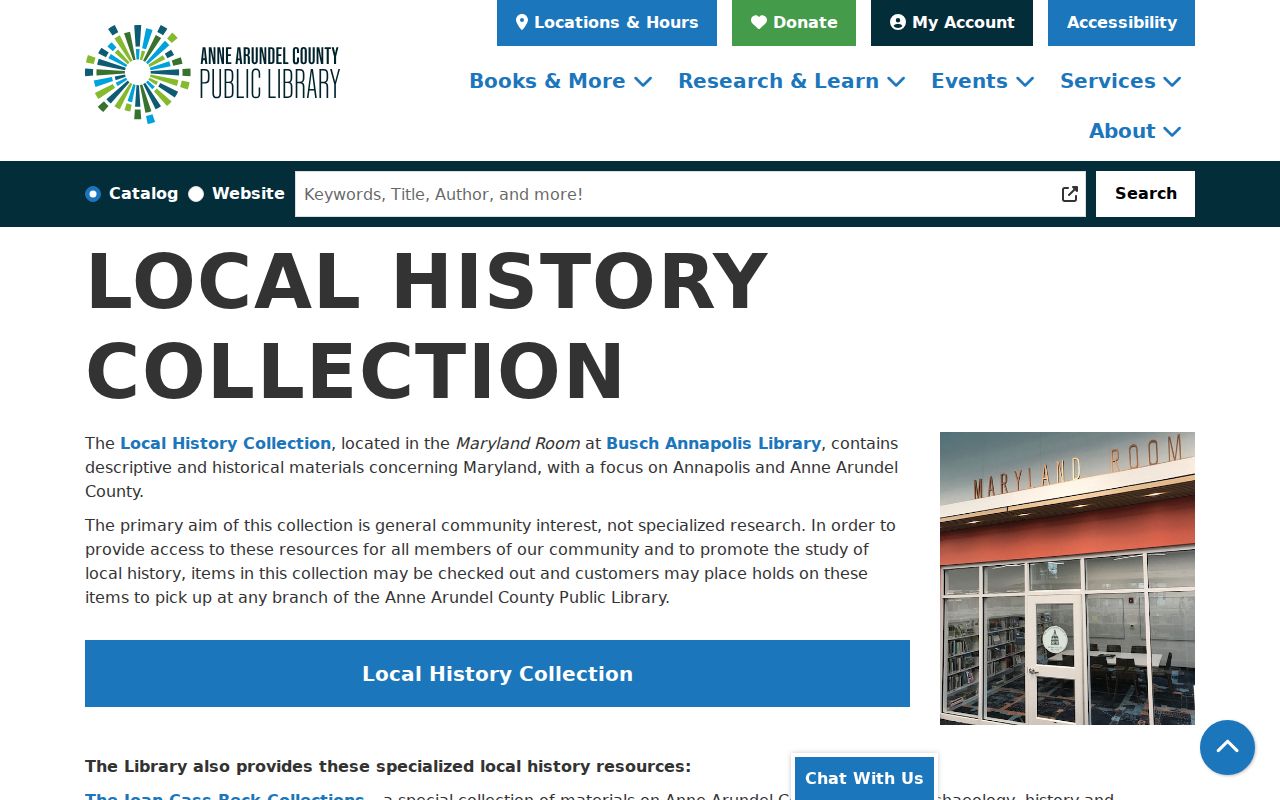
Bring specifics when asking for house-history help: the modern address, PAN, subdivision, lot, former owner names, and a rough construction date. Librarians and clerks work faster with those details.
Note: A directory identifies a dated listing, while a census names a household on a different date, so neither proves permanent occupancy.
Odenton Estate Index Trail for Former Owners
An estate record can close a gap in an Odenton search. A former owner may vanish from the deed or directory trail. The Maryland State Archives digitization list identifies Anne Arundel Register of Wills estate index CE299. It covers 1875-1960. Older series run roughly 1777 to 1893. These cover accounts-of-sale, administration accounts, guardian accounts, and inventories. Recent estate filings go through the current Register of Wills office. Together these records can identify an estate, fiduciary, heir, or property-related lead, depending on the visibility of the filing.
The Maryland State Archives death-index series gives one historical endpoint. Compare it against probate and directory findings.
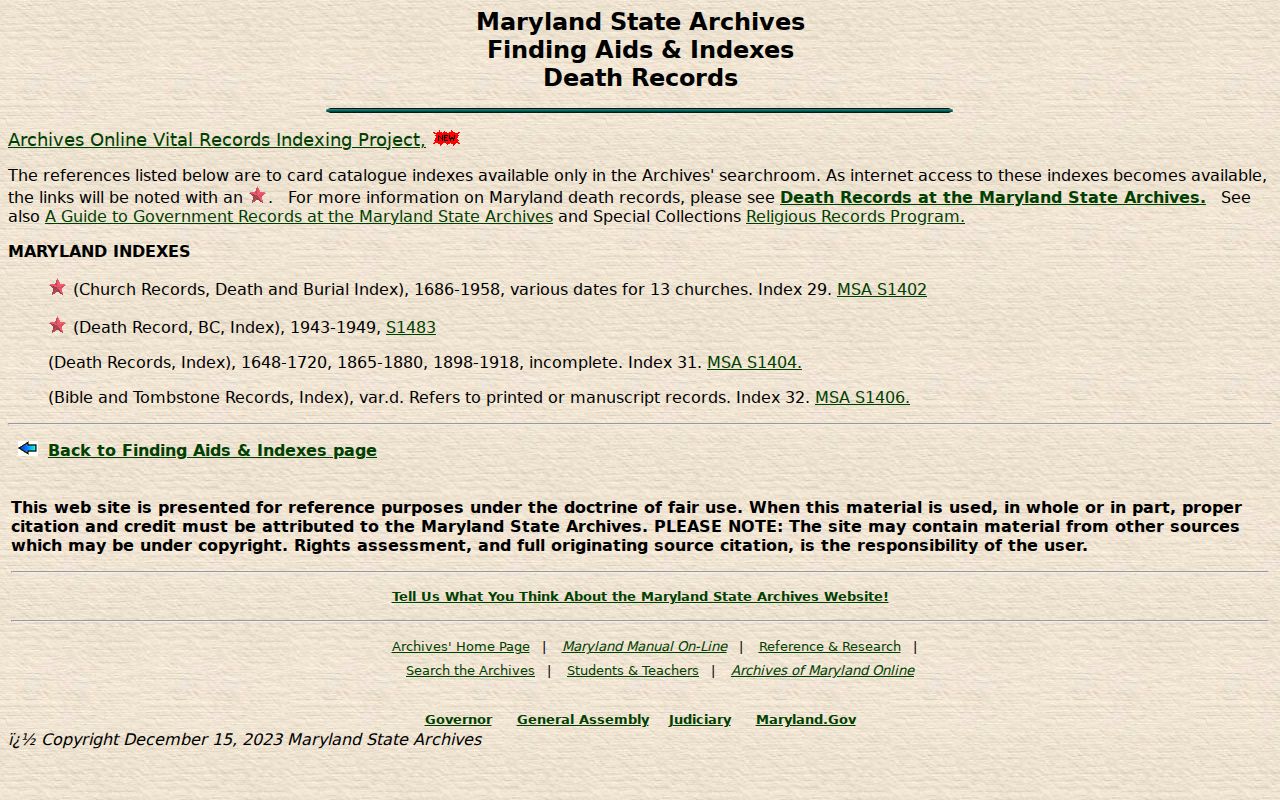
An index is only a pointer. It points to a record or series, nothing more. Sharing a name with an index entry does not make someone the former Odenton resident being traced. The Archives death-record ordering information describes the separate historical-record route and its access context.
Before ordering or relying on a record, gather the event place and date, name variants, the index citation, and relationship evidence.
Odenton Permit and Map Gaps
Permits and planning files can date a structure or a major change. The county's public Land Use Navigator, though, is not a complete house history. Basic existing-record searches need no login. They can be run by address, record, licensed professional, trade name, or contact. For address work, the county advises entering the street number. It also advises entering the first part of the street name. Documents may be limited. Missing material is a cue to request the correct record through the custodian rather than assume the event never happened.
Sanborn maps can add building-footprint or use context when a sheet exists. But the county publishes no Odenton-specific year run. Search the Library of Congress collection by Odenton. Try Anne Arundel County, historic railroad labels, and nearby communities too. The AACPL Maryland Room, Joan Cass Beck Collection, Kuethe Library, and Odenton Heritage Society are the local channels for maps. They also hold site files, books, photographs, and archival guidance.
Respecting Limits in Odenton Previous Residents Research
Research into past residents of Odenton works best as house history, family history, estate research, or a way to document a parcel's story. Each record type proves a different thing. A deed shows recorded legal interest, not all occupants. A directory can name a subscriber or householder, not every person present. Voter rolls, utility records, motor-vehicle files, medical records, sealed court matters, and protected addresses all carry separate legal limits. Keep each source at its stated level of proof. Verify uncertain details with the custodian.
Lawful use. Use Odenton address history for legitimate personal, historical, family, or estate research. Do not use a record trail to track, harass, threaten, or harm any living person.
Maryland's Address Confidentiality Program shields enrolled participants' actual voter addresses from public inspection or copying. Exceptions are limited to the circumstances set by law. A protected or missing record can be the correct legal result. Respect that boundary. Use the record office, library, archives, mail-copy process, or written records request. It simply needs to fit the collection sought.